NIST AI RMF Explained: Managing AI Risk Without Slowing Down
Every team in your company is trying AI tools right now. Some of it is great. Some of it is quietly feeding customer data into systems nobody approved. Leaders need a way to say yes to AI without losing control of the risk.
That’s what the NIST AI Risk Management Framework (AI RMF) is for. It’s voluntary, free, and written for organizations of any size.
What the AI RMF Is
NIST released AI RMF 1.0 in January 2023. It helps organizations identify and manage risks from AI systems, from bias and privacy problems to security and reliability failures. In July 2024, NIST added a Generative AI Profile (NIST AI 600-1) that applies the framework to tools like chatbots and image generators.
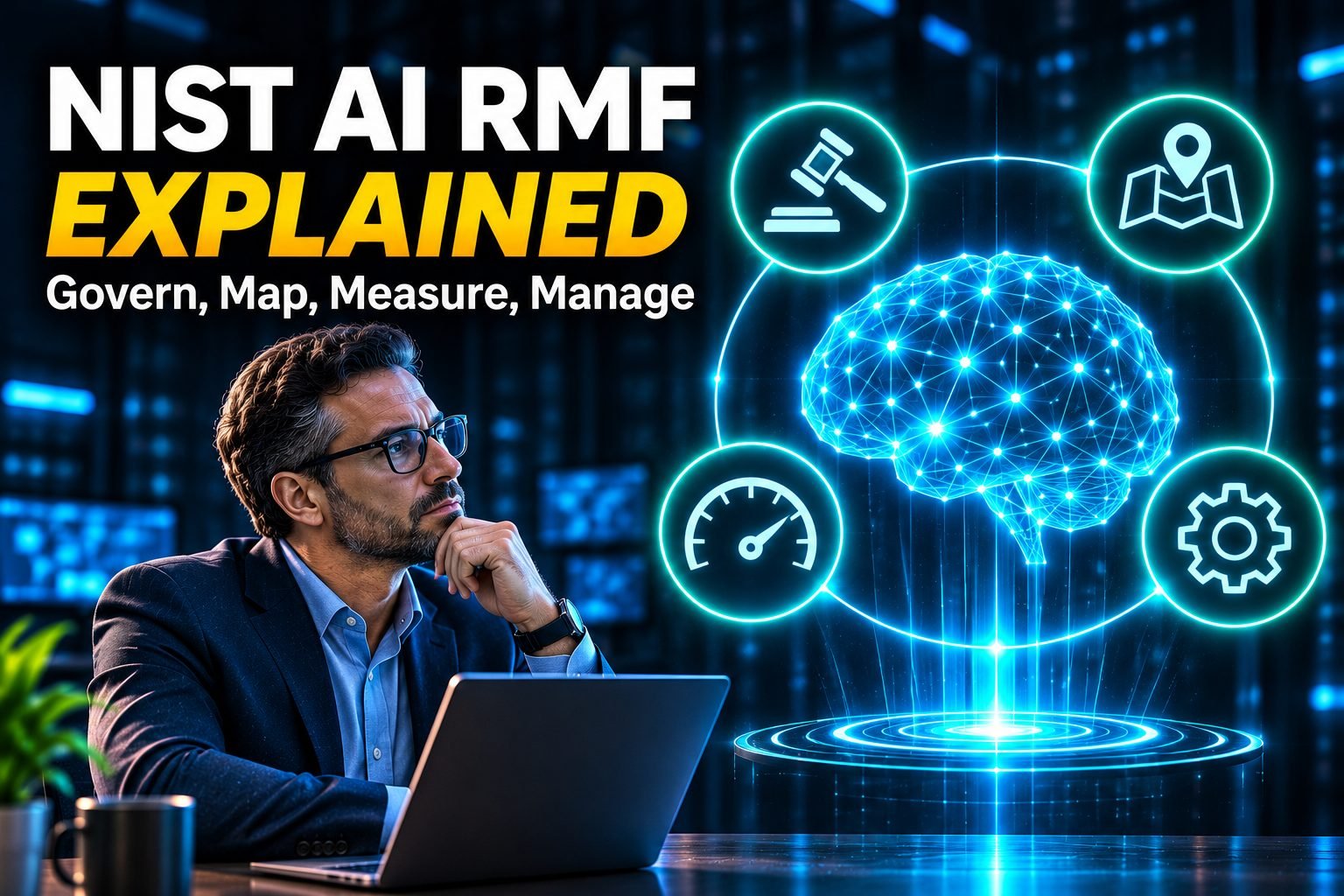
The Four Functions
| Function | What it means in practice |
|---|---|
| Govern | Policies, roles, and accountability for AI across the organization. This one runs through everything else. |
| Map | Understand the context: what each AI system does, who it affects, and what could go wrong. |
| Measure | Test and track risks, like accuracy, bias, security, and drift, with real metrics. |
| Manage | Prioritize the risks, act on them, and keep monitoring after deployment. |
If you know the NIST Cybersecurity Framework, this will feel familiar. Govern plays the same leadership role in both.
How to Start This Quarter
- Inventory the AI tools and models already in use, including the ones teams signed up for on their own.
- Write a one-page acceptable-use policy for AI. What data can and can’t go into these tools?
- Pick your highest-risk use case (anything touching customers, hiring, or money) and walk it through Map and Measure.
- Assign an owner. AI risk without an owner turns into nobody’s risk.
AI RMF vs ISO 42001 vs the EU AI Act
The AI RMF is voluntary guidance. ISO/IEC 42001 is a certifiable management system standard for AI. The EU AI Act is law, with obligations that depend on how risky your AI use is. Many organizations use the AI RMF as their practical playbook and map it to the other two.
FAQ
What are the four functions of the NIST AI RMF?
Govern, Map, Measure, and Manage.
Is the NIST AI RMF mandatory?
No. It’s voluntary guidance, though some government contracts and policies reference it.
What is NIST AI 600-1?
The Generative AI Profile, published in July 2024, which applies the AI RMF to generative AI risks.
Who should own AI risk in a company?
A named executive, supported by a cross-functional group from security, legal, privacy, data, and the business.