NIST CSF vs ISO 27001: Which One Does Your Organization Actually Need?
If you’ve sat through a security strategy meeting lately, you’ve probably heard both names thrown around like they’re interchangeable. They’re not. One is a flexible framework you adopt. The other is a standard you can be certified against. Picking the wrong one first can cost you a year.
Here’s the short version. If customers or contracts are asking for proof, ISO 27001 usually wins. If you need a plan and a common language for your board, start with NIST CSF. And plenty of organizations end up using both.
The Core Difference
| NIST CSF 2.0 | ISO/IEC 27001:2022 | |
|---|---|---|
| What it is | A voluntary framework of cybersecurity outcomes | An international standard for an information security management system (ISMS) |
| Who publishes it | U.S. National Institute of Standards and Technology | ISO and IEC |
| Certification | No official certification | Yes, through an accredited certification body |
| Cost to use | Free | Standard costs money to buy, plus audit fees |
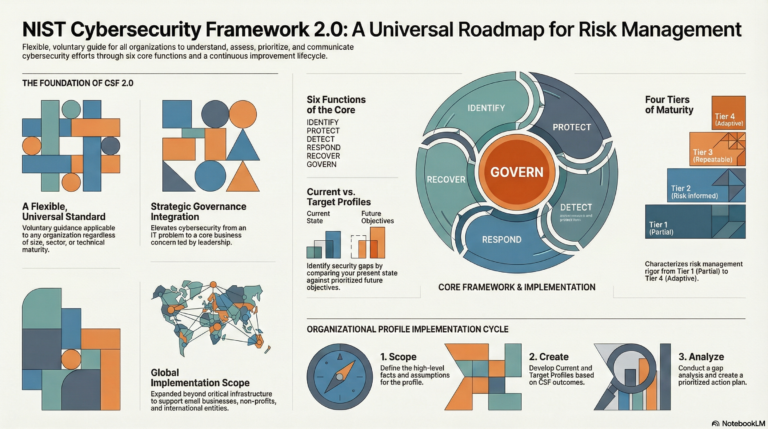
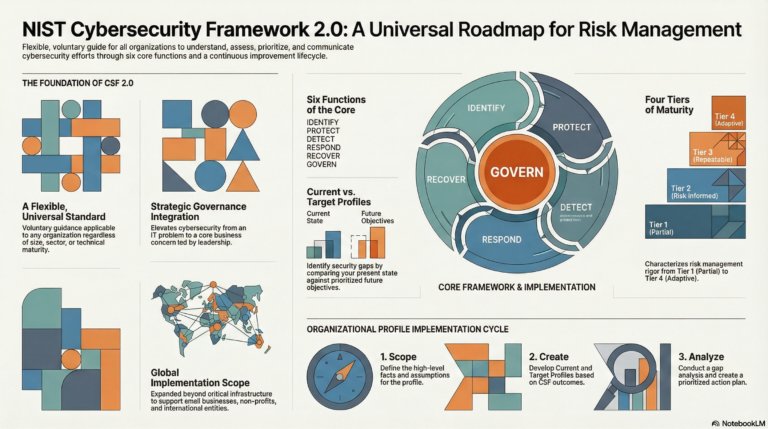
| Structure | 6 functions, 22 categories, 106 subcategories | Management system clauses 4 to 10, plus 93 Annex A controls |
| Best known in | U.S. companies and government | Global business, especially Europe and Asia |
NIST CSF tells you what good security outcomes look like and leaves the how to you. ISO 27001 requires you to build a management system around security (risk assessments, policies, internal audits, management reviews) and then prove it to an outside auditor.
When NIST CSF Makes More Sense
Pick CSF first if you need a roadmap more than a certificate. It’s free, it scales from a 20-person company to a federal agency, and its language works well in board reports. The CSF 2.0 Govern function also gives leadership a clear role, which many programs lack.
It’s also the better fit when you work with U.S. government agencies or critical infrastructure, where CSF is the common reference point.
When ISO 27001 Makes More Sense
Go with ISO 27001 when someone outside your company wants evidence. Large customers, especially international ones, often ask for an ISO 27001 certificate during procurement. A certificate can shorten those security questionnaires dramatically.
The trade-off is effort. Certification usually means months of preparation, a two-stage certification audit, yearly surveillance audits, and recertification every three years.
Using Both Together
This is more common than people think. Many organizations use CSF to plan and communicate, then use ISO 27001 as the formal management system that proves it. The two map to each other well, and NIST publishes informative references that connect CSF outcomes to other standards.
My take: if you’re not sure, start with a CSF Current and Target Profile. It costs nothing, and it shows you how far you are from ISO 27001 if a customer asks for it later.
A Simple Decision Guide
- Is a customer, contract, or regulator asking for a certificate? Choose ISO 27001.
- Do you mainly need a plan and a way to report risk to leadership? Start with NIST CSF.
- Do you sell globally and also need a board-level roadmap? Use CSF to plan and ISO 27001 to certify.
FAQ
Is NIST CSF or ISO 27001 better?
Neither is better overall. ISO 27001 is better when you need certification. NIST CSF is better as a free, flexible planning framework.
Can you get certified in NIST CSF?
No. There is no official NIST CSF certification for organizations. You can be assessed against it, but ISO 27001 is the certifiable option.
How many controls are in ISO 27001:2022?
Annex A of ISO/IEC 27001:2022 lists 93 controls grouped into four themes: organizational, people, physical, and technological.
Does NIST CSF map to ISO 27001?
Yes. Many CSF outcomes line up with ISO 27001 requirements and Annex A controls, which makes it practical to use both.