
What Is a Framework? A Plain-English Guide for Business and Tech Leaders
A framework is a reusable structure for solving a problem you’re not the first to have. That’s it. Someone already figured out the steps, the vocabulary, and the common mistakes, and wrote them down so you don’t have to start from a blank page.
The word gets used for wildly different things, though. NIST CSF is a framework. So is Django. So is SAFe. If you lead people who work in security, IT, architecture, or software, you’ll hear all three in the same week, and it helps to know what kind of framework someone means before you nod along.
Frameworks vs. Standards vs. Methodologies
These terms get blurred constantly. Here’s how I’d separate them.
| Term | What it does | Example |
|---|---|---|
| Framework | Gives you a structure and a shared vocabulary, but leaves the details to you | NIST Cybersecurity Framework, TOGAF |
| Standard | Sets specific requirements you can be audited or certified against | ISO/IEC 27001 |
| Methodology | Prescribes a step-by-step way of working | Scrum, PRINCE2 |
| Software framework | Provides prewritten code and rules your application plugs into | Django, .NET |
The practical difference: you adopt a framework, you comply with a standard, and you follow a methodology. Mixing them up is how teams end up “implementing” something that was never meant to be implemented word for word.
The Five Kinds of Frameworks Leaders Run Into
1. Security and risk frameworks
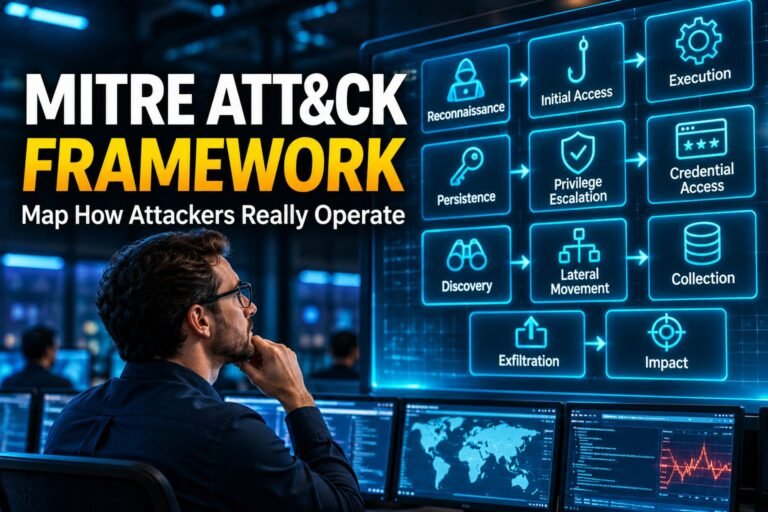
These help you decide what to protect and how well you’re doing it. The NIST Cybersecurity Framework is the most common starting point. The NIST Risk Management Framework goes deeper for federal systems, and MITRE ATT&CK maps how attackers actually operate.
2. IT service and governance frameworks
These describe how IT runs day to day and how it answers to the business. ITIL covers service management. COBIT covers governance and control.
3. Architecture frameworks
These help you plan how systems, data, and processes fit together over years, not sprints. TOGAF is the best known. The AWS Well-Architected Framework applies the same idea to cloud workloads.
4. Delivery and agile frameworks
These coordinate how teams plan and ship work. The Scaled Agile Framework (SAFe) is built for large organizations running many agile teams at once.
5. Software development frameworks
These are code, not policy. Django REST Framework and .NET give developers prebuilt components and conventions so they don’t rebuild the same plumbing on every project.
Why Frameworks Work (When They Do)
Whether it’s a security framework or a web framework, the same few ideas explain why they save time.
- Consistency. Everyone follows the same structure, so work is easier to review, hand off, and audit.
- A shared language. When your CISO says “Govern” and your auditor says “Govern,” they mean the same thing.
- Separation of concerns. Each part has one job, which makes problems easier to isolate. In software that means data, logic, and display stay separate. In governance it means strategy, operations, and oversight do.
- Reuse. You build on proven patterns instead of inventing your own.
- Room to grow. Good frameworks are built to be extended, so you can start small and add maturity over time.
How to Pick the Right One
Start with the problem, not the framework. “We need NIST” is a solution looking for a problem. “Our board wants to know if we’re managing cyber risk” is a problem, and NIST CSF happens to answer it well.
Then ask three questions. Does a customer, regulator, or contract require a specific one? (If so, that decides it.) What does your industry already use, so you can borrow templates and hire people who know it? And how much can your team realistically absorb this year?
My honest take: most organizations adopt too many frameworks too fast. Pick one, get a basic version working, and expand from there. A half-implemented framework mostly produces documents nobody reads.
Common Mistakes
Treating a framework as a checklist is the big one. Frameworks describe outcomes. They rarely tell you exactly how to reach them, and that’s on purpose.
The second mistake is buying a tool before you understand the framework. Software can track your progress, but it can’t decide your priorities. Our frameworks glossary is a good place to get your bearings first.
FAQ
What is a framework in simple terms?
A reusable structure that gives you proven steps, shared terms, and guardrails for solving a common problem, whether that’s managing risk or building an app.
What is the difference between a framework and a standard?
A framework is flexible guidance you adapt. A standard sets specific requirements you can be audited or certified against, like ISO/IEC 27001.
What are the most common business and IT frameworks?
NIST CSF and NIST RMF for security and risk, ITIL and COBIT for IT service and governance, TOGAF for enterprise architecture, and SAFe for scaled agile delivery.
Is a software framework the same as a business framework?
No. A software framework is code developers build on. A business or IT framework is guidance for how an organization plans, governs, or operates.
Do small companies need frameworks?
They need fewer, not none. A lightweight version of one framework, like the NIST CSF basics, gives a small team a shared plan without heavy paperwork.